The Coming Wave of Canine Weight-Loss Drugs, Explained
Published: 22 August 2025
Key Takeaways
- Biotech firms are testing GLP-1–style approaches for canine weight loss to reduce excessive begging, scavenging and portion size battles.
- Okava is advancing OKV-119, a six-month implant designed to deliver exenatide (a GLP-1 mimic) in dogs, pending successful trials and approvals.
- Earliest availability being discussed publicly is 2028–2029; timelines depend on efficacy, safety and regulators.
- Vets still recommend a calorie-controlled diet, enrichment and regular activity as first-line care for most overweight dogs.
- Owners can get structured help via supervised dog day care, tailored training and—for trips—safe boarding.
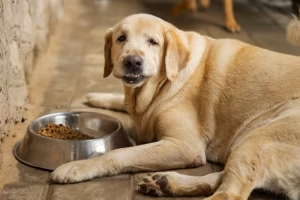
With the runaway success of human weight-management drugs like Ozempic and Mounjaro, researchers and biotech firms are turning to the next frontier: GLP-1–style weight-loss drugs for dogs. With estimates suggesting that up to 60 per cent of UK dogs are overweight or obese, the potential demand is obvious—so are the welfare stakes for pets and their families. For owners who already measure meals and walk daily yet still battle scavenging and begging, a safe, well-tolerated therapy could be an extra lever to help dogs reach a healthier body condition score.
What is being developed—and how might it work?
Human drugs such as semaglutide (Ozempic/Wegovy) and tirzepatide (Mounjaro/Zepbound) mimic hormones that help regulate blood sugar and appetite. People feel fuller for longer and naturally reduce intake. Translating this to dogs, developers want appetite-modulating benefits without illness-like behaviour: normal interest in meals, normal playfulness—but fewer pleading eyes at the dinner table and less scavenging on walks.
One candidate drawing attention is OKV-119, a small implant intended to last around six months. Rather than daily tablets or injections, a vet would place the implant during a routine appointment. It would then release a controlled dose of exenatide—a GLP-1 receptor agonist—aiming to smooth out peaks and troughs and make compliance easier for busy households. Developers frame the goal as “appropriate portions without ‘food obsession’” rather than a dull, uninterested pet.
“What owners should expect to see is their pet eating appropriate portions without the previous food obsession—they’ll still eat regularly and show interest in meals, just without the excessive begging, scavenging or gulping behaviour.” — Okava CEO Michael Klotsman
The science in simple terms
GLP-1 is a hormone produced in the gut after eating. Among other effects, it slows gastric emptying and signals to the brain that a meal was satisfying. In people, GLP-1–based therapies can help lower appetite and improve glycaemic control. Dogs are not small humans, but they share enough physiology that similar pathways could be useful—if dosing, delivery and side-effect profiles are tuned for canine metabolism, breed variation and activity levels.
Why implants? Steady delivery may avoid the “roller coaster” of daily administration that some households struggle to maintain. It could also reduce nausea that sometimes accompanies higher peaks with other routes. That said, any implant must be easy to place, monitor and remove if needed—practicalities that trials will have to demonstrate clearly.
Why now? The scale and day-to-day cost of pet obesity
Excess weight is among the most common—and preventable—welfare issues in companion animals. It shortens life expectancy and increases the risk of joint disease, diabetes and respiratory compromise. The daily reality can be subtle but relentless: a dog that tires early on walks, hesitates on stairs, or loses enthusiasm for play. Owners often know what to do—weigh the food, cut extras, move more—but consistency is hard in real households with multiple caregivers, visiting relatives and children who love handing out treats.
That behavioural backdrop is why an adjunct therapy is attractive: not as a shortcut, but as a support for routines that already work—measured portions, enrichment and regular activity. If a medicine can dampen persistent scavenging and “pantry raids,” it may be easier for families to stick to the plan long enough for healthy weight loss to show.
What trials will need to prove
Before any canine GLP-1 therapy becomes widely available, studies will need to show that benefits outweigh risks. Expect endpoints such as:
- Meaningful weight loss at a safe, gradual pace, plus improvement in body condition score (BCS).
- Quality of life measures: playfulness, willingness to walk, enthusiasm for training and normal social behaviour.
- Owner-perceived acceptability: a pet that still enjoys meals and family time without seeming unwell.
- Side-effect profile: how often do GI signs like vomiting or diarrhoea occur, and do they settle with dose adjustments?
- Durability: does the benefit persist across breeds, ages, neuter status and home environments? What happens after an implant cycle ends?
Another consideration is rebound. After treatment stops, can households maintain progress through routine—measured feeding and activity—or does weight creep back? Education and follow-up will matter as much as the molecule itself.
Lessons from history: when the first dog obesity drug underwhelmed
Slentrol (dirlotapide), the first FDA-approved veterinary obesity medication for dogs, launched in 2007. It operated via a different mechanism (affecting fat absorption and satiety signals) and produced weight loss in many patients—but uptake was limited. A key reason was owner experience. If a medication led to behaviour that felt “off”—reduced eagerness, queasiness, altered mood—people often stopped using it. The lesson for any new therapy is clear: even if the pharmacology “works,” success lives or dies in kitchens, parks and living rooms.
Welfare and ethics: the bar for a “lifestyle” medicine
Because many canine weight issues respond to consistent diet and exercise, the ethical bar for a medicine is high. Trials should demonstrate not only numbers on a scale but also positive welfare—dogs that are comfortable, keen to learn and eager to play. Owners deserve transparent information on benefits, risks and alternatives, plus clear guidance for monitoring at home (appetite, stool quality, energy and mood).
Price and access will factor into ethics too. If an implant is costly, the most equitable impact may come from pairing it with simple, low-cost tools (kitchen scales, slow-feed bowls, snuffle mats) and community support (group walks, day-care activity blocks, training refreshers). The future may look less like “a jab fixes it” and more like a package that blends medical, behavioural and environmental elements.
A practical eight-step plan (to start now)
- Vet check and target weight: rule out medical drivers (thyroid, pain, etc.) and agree a realistic goal.
- Weigh the food: use a kitchen scale; eyeballing leads to drift. Record grams per meal.
- Treat audit: list every daily extra (biscuits, chews, table scraps) and assign a small, fixed allowance.
- Build rhythm: two or three short walks can beat one long push; layer in scent games on wet or hot days.
- Enrichment tools: slow-feed bowls, lick mats and snuffle mats channel food interest into brain work.
- Training micro-bursts: 3–5 minutes, 2–3 times per day, exchanging a portion of meal kibble for simple cues.
- Track weekly: weigh once a week at the same time of day; log BCS notes (rib feel, waist tuck, belly line).
- Get help when life gets busy: use supervised day care to keep routine and activity on track; book boarding for trips to avoid back-sliding.
Owner psychology & compliance: making the plan stick
Most owners love their dogs fiercely—food becomes a love language. Reframing helps: treat moments can become training moments; one chew can become a short scatter-feed in the garden; table-scrap requests become cues for a sniff-and-seek game. Share the plan with the whole household so grandparents and children know the boundaries. If someone “leaks” extras, give them a new job: five minutes of recall practice or a snuffle-mat reset after dinner.
Measuring body condition at home
Scales are useful, but the mirror matters too. In most dogs, you should feel—though not see—the ribs without digging, notice a waist from above and a clear belly tuck from the side. Keep a weekly photo from the same angle and distance; progress is often easier to see in pictures than on a single number.
Training that helps reduce scavenging
- “Leave it” and “drop” refreshers: practise with low-value items first, rewarding generously for compliance.
- Automatic check-ins: mark and reward when the dog glances up at you on walks; build the habit before temptations appear.
- Structured sniff zones: give a designated area for foraging (leaf piles, snuffle patches) so scavenging has an “on/off” switch.
When would medication make sense?
Most dogs do well with diet and activity when families are consistent. Medication—if and when approved—may be considered when weight threatens health despite months of solid routine, or when medical issues (e.g., mobility pain) make activity hard while weight reduction is urgently needed. Any decision should be vet-led, evidence-based and paired with a plan for food, enrichment and movement.
⚠️ Safety Tip
If you are worried about your dog’s weight, speak to your vet about a tailored plan. Measured portions, enrichment (slow-feed bowls, lick mats, scent games) and regular, gentle activity are reliable first steps. For general owner guidance, see the RSPCA’s advice: RSPCA pet obesity advice. For hands-on structure, consider supervised day care and targeted training.
FAQs: GLP-1–style weight-loss drugs for dogs
When could an “Ozempic for dogs” be available?
Public discussion around implants like OKV-119 points to an earliest arrival around 2028–2029, subject to trial outcomes and regulators. Timelines can shift; plan on diet + activity now and treat any future medicine as an add-on, not a replacement.
How would these dog weight-loss drugs work?
They aim to mimic GLP-1, a gut hormone that contributes to satiety signals and glucose control. The hope is a dog that still enjoys meals and training but is satisfied with appropriate portions and shows less compulsive food-seeking.
Are they safe?
Only robust trials can answer that. Vets will monitor for side-effects (for example, gastrointestinal upset) and for any masking of illness, since appetite changes can signal disease. Dosing, breed differences and long-term use all need careful study.
Will my dog stop enjoying food?
The goal is not to remove food interest. Developers describe a pattern of normal mealtimes without the constant scavenging, begging or gulping behaviour. Owners and vets will watch mood, energy and playfulness closely.
What about cost and access?
Pricing is unknown. If a product arrives, value will come from pairing it with low-cost tools (kitchen scales, slow-feed bowls, snuffle mats) and consistent routines so you get durable results—rather than a short-lived dip followed by rebound.
Was there a previous dog obesity drug?
Yes. Slentrol (dirlotapide) launched in 2007 as the first FDA-approved canine obesity medicine. It worked differently and had mixed adoption, in part due to owner perceptions of pets’ behaviour during treatment. Owner experience will be central again.
Does this mean exercise is optional?
No. Movement supports joints, heart health and behaviour. Short, frequent walks, gentle hills, hydrotherapy (if recommended), and training games all help. A medicine—if appropriate—would be a complement, not a substitute.
What should I do now if my dog is overweight?
Book a vet check, then commit to measured portions, structured activity and enrichment. If you need practical help, consider supervised day care and tailored training. Keep a weekly log for food and weight to track progress.
Related