
Fleas, Ticks, Mites, Lice and Worms
By RVN Ros Sherlock | 11 August 2025
Parasites are a common issue in dogs and can lead to a wide range of health problems if left untreated. Most dogs will experience at least one type of parasite during their lifetime. Understanding the different types—both ectoparasites (external) and endoparasites (internal)—is essential for anyone involved in the care of dogs.
Ectoparasites (External Parasites)
Ectoparasites live on the outside of a dog’s body. The most common examples are fleas, ticks, mites, and lice.
Fleas
Fleas are small, brown, wingless insects that feed on a dog’s blood. Surprisingly, the most common flea found on dogs is the cat flea (Ctenocephalides felis). Signs include scratching, nibbling, and the presence of black specks (flea dirt) in the coat. When placed on damp tissue, flea dirt will stain pink due to the digested blood it contains.
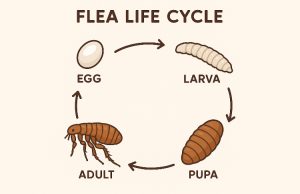
Some dogs develop flea allergy dermatitis—an allergic reaction to flea saliva—which can lead to hair loss and skin sores requiring veterinary treatment. Regular monthly flea prevention is the best way to avoid recurrence. Fleas can infest both pets and the environment. An adult female can lay up to 50 eggs a day, which fall into carpets, bedding, and floorboard cracks. Eggs hatch into larvae, develop into pupae, and eventually emerge as adults—sometimes remaining dormant for up to six months. Treating both the dog and the home with a suitable flea spray or bomb is essential for eradication.
Ticks
Ticks are spider-like parasites that attach to the skin and feed on blood. As they feed, their bodies swell and become more visible, usually turning greyish in colour. Always use a tick remover to avoid leaving the head embedded, which can cause infection.
Ticks are most active in warmer months and are often picked up in long grass (sheep ticks) or gardens (hedgehog ticks). They can transmit diseases such as Lyme disease and, rarely in the UK, babesiosis.
Mites
Mites are microscopic parasites that may live on the skin or in the ear canals. Diagnosis often requires skin scrapes or tape strip tests examined under a microscope. Common types include:
- Sarcoptes scabiei (sarcoptic mange) – Extremely itchy and highly contagious to other dogs and humans. Requires prompt veterinary treatment and household-wide management.
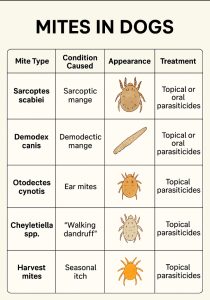
- Demodex canis (demodectic mange) – Lives in hair follicles. Not contagious, but can cause skin issues in dogs with weakened immune systems.
- Otodectes cynotis (ear mites) – Causes head shaking, black wax build-up, and ear odour. Easily spread to other pets.
- Cheyletiella (“walking dandruff”) – Visible moving mites causing dandruff-like debris. Contagious to pets and humans.
- Trombicula autumnalis (harvest mites) – Bright orange mites found on paws, belly, and ears in late summer/autumn, causing intense itching.
Lice
Lice are wingless insects that live in the coat and feed on skin debris or blood. They are species-specific and will not infest humans or cats. Infestation signs include scratching, hair loss, and—in severe cases of sucking lice—anaemia.
Endoparasites (Internal Parasites)
Endoparasites live inside a dog’s body and can affect the digestive system, lungs, and heart. Worm infestations may cause symptoms or go unnoticed, but they can still spread to other animals and sometimes humans.
Toxocara canis (Roundworm)
The most common worm in dogs, transmitted via the placenta, mother’s milk, ingestion of infected faeces, or hunting rodents/birds. In puppies, signs include a pot-bellied appearance, poor growth, vomiting, and diarrhoea. Roundworms are zoonotic and can cause serious illness in humans, including blindness.
Tapeworms (Dipylidium caninum, Taenia spp.)
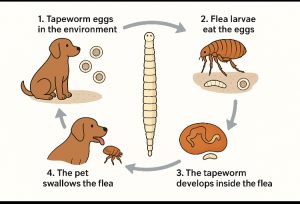
Often transmitted when dogs swallow fleas while grooming. Tapeworm segments resemble grains of rice and may be seen around the anus or in faeces. Prevention requires regular flea and worm treatments.
Angiostrongylus vasorum (Lungworm)
Spread through ingestion of infected slugs/snails or their slime trails. Worms live in the heart and lungs, causing coughing, breathing difficulty, lethargy, and bleeding disorders. Lungworm can be fatal if untreated.
Prevention
All of these parasites are preventable with monthly veterinary-recommended treatments. Prevention is far easier, safer, and less costly than treatment after infestation or infection occurs.